Leisure in Torrevieja
Tower of the Moor in Torrevieja
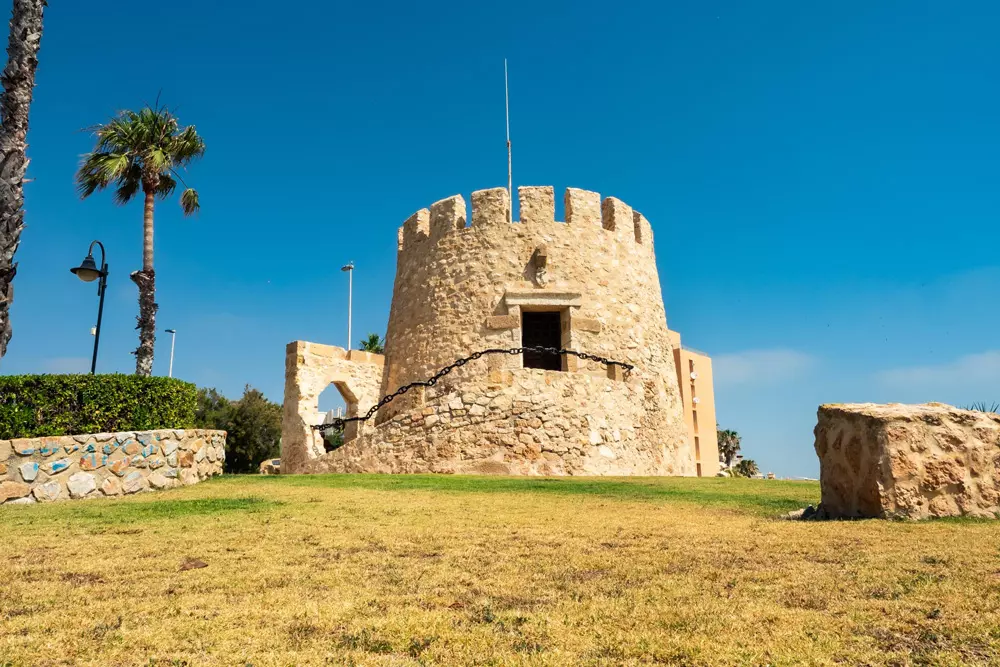
The Torre del Moro is one of the most emblematic historical monuments in Torrevieja, Alicante. Declared a Site of Cultural Interest (BIC) in 1985, this watchtower is part of a coastal defense system that protected the area from pirate attacks and served as a communication point between other fortifications.
Its strategic location in Cabo Cervera, about five kilometers from the center of Torrevieja, makes it an exceptional vantage point with views of the Mediterranean.
History of the Torre del Moro
Origins and Construction
The first documented reference to the Torre del Moro dates back to 1320, although it is unknown whether it was built from scratch or on the remains of an earlier tower. In 1312, King James II of Aragon authorized the Orihuela Council to build a watchtower on Cape Cervera (Cap Cerver in Valencian).
Along with the Torre de La Mata and the now-defunct Torre-Vieja (which gave the city its name), it formed part of a coastal defense network that warned of invasions using smoke and fire signals.
Military Function and Historical Attacks
The tower not only served as a lookout but also housed a small military detachment. In 1378, it was attacked by two Muslim galleys, requiring reinforcements from Orihuela to repel the invasion.
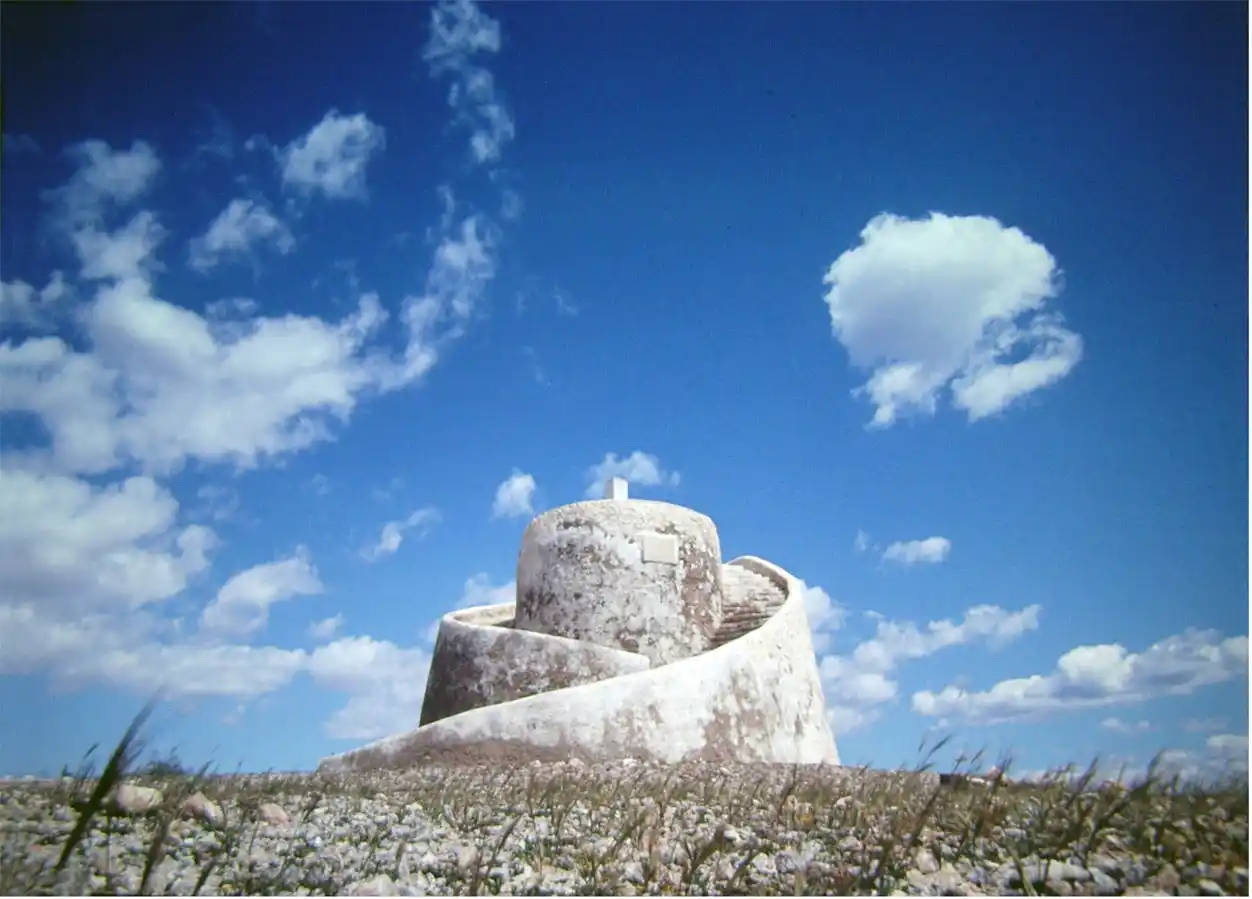
During the Castile-Aragonese War, the tower played a strategic role in the defense of the territory. In the 16th century, it was rebuilt, possibly under the direction of the military engineer Juan Bautista Antonelli, who also worked on the La Mata Tower.
Transformation in the 18th Century
In the 18th century, King Charles IV authorized the transfer of the administration of the Royal Salt Mines to Torrevieja, which boosted the city's growth. Although the tower lost part of its military function, it remained a symbol of Torrevieja's identity.
Architecture and Remodeling
The Torre del Moro has a circular floor plan and a truncated cone shape, typical of Mediterranean watchtowers. It is built with masonry (irregular stone joined with mortar) and originally had an interior spiral staircase leading to the upper level.
1960: A first restoration was carried out respecting its original structure.
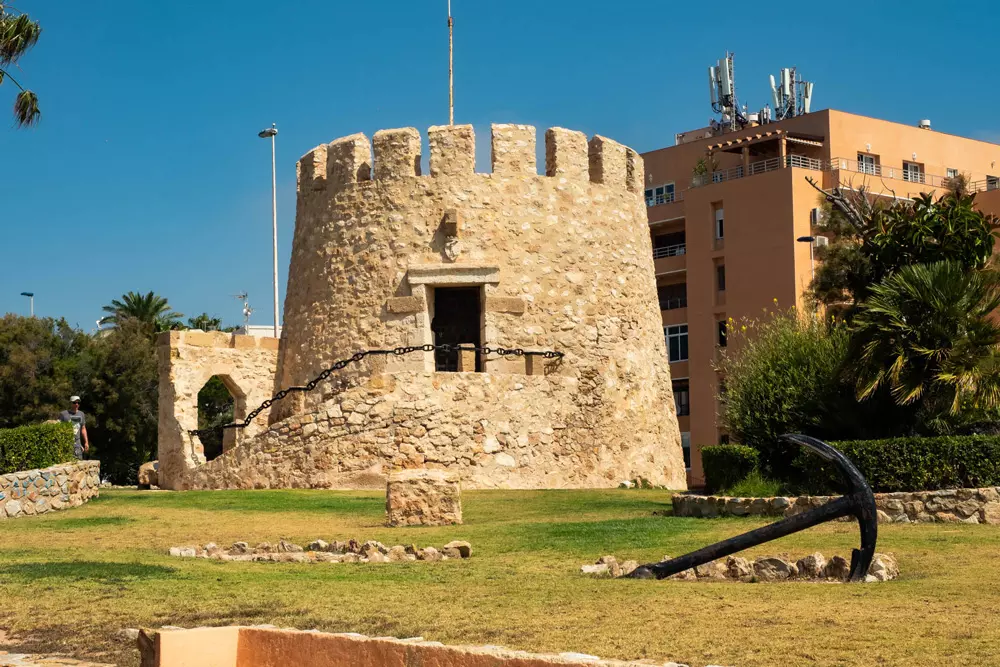
1994: Its appearance was modified, adding battlements and the coat of arms of Torrevieja, giving it a more medieval feel.

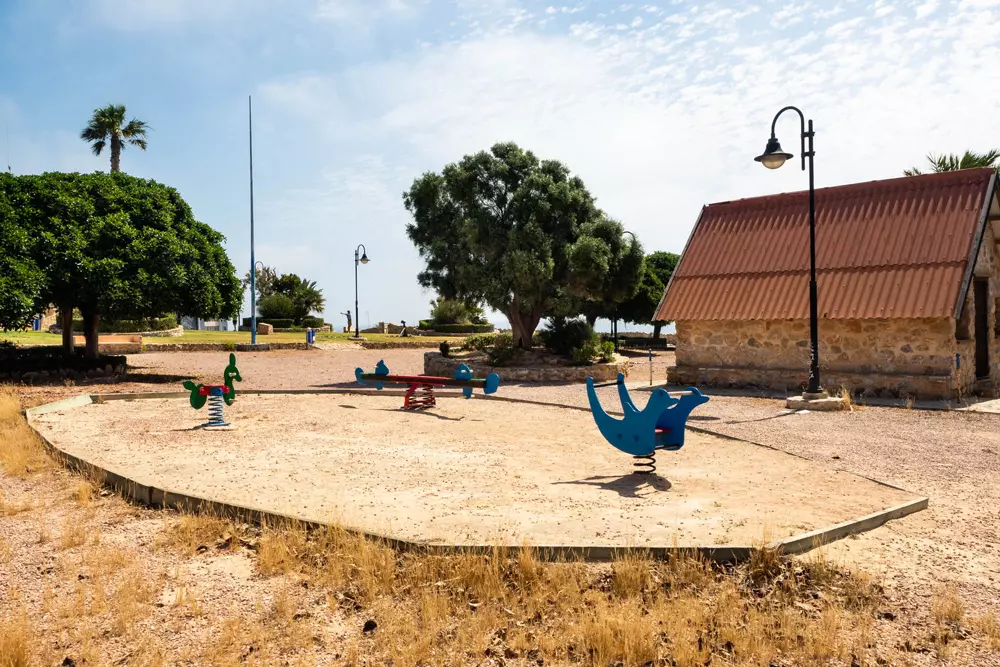
Recreational Area and Viewpoint
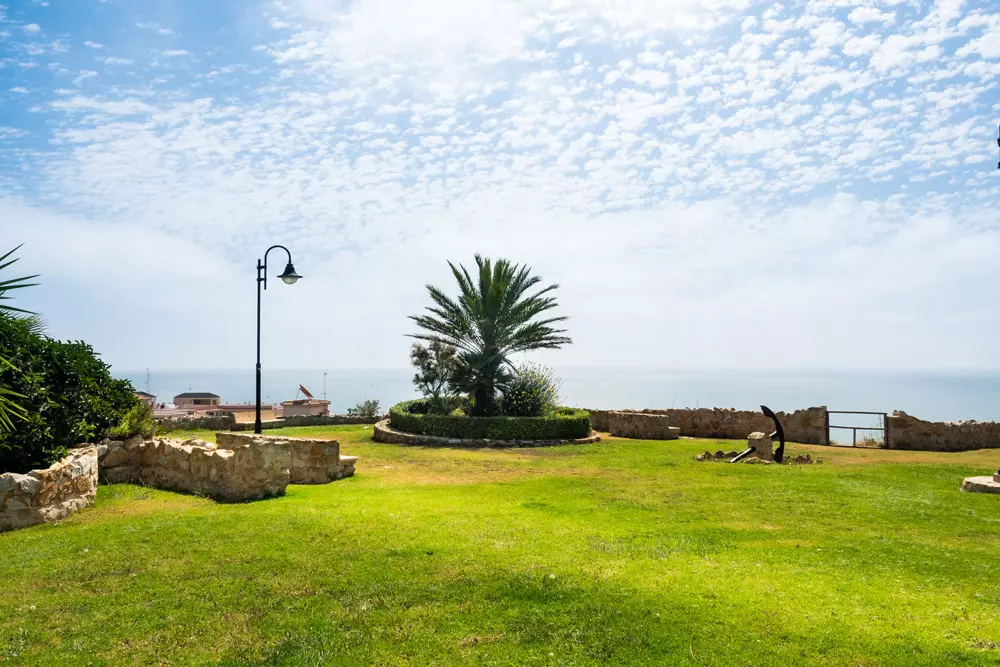
The tower's immediate surroundings have been converted into a large recreational area spanning 23,000 square meters. This well-maintained park features numerous strategically placed benches so visitors can sit and contemplate the stunning seascape. During the summer months, a charming kiosk with a terrace opens its doors, offering a perfect place to enjoy refreshments while enjoying the sea breeze.
The area, equipped with large green areas and trash cans to maintain its cleanliness, has become a very popular meeting point. Tourists are frequently seen capturing the beautiful sunsets with their cameras, as well as newlywed couples who choose this natural setting for their wedding photographs, drawn by the romantic atmosphere and privileged views offered by this historic site.
The design of the space, which combines history and nature, makes the Torre del Moro one of the most visited and photographed places in Torrevieja.
Curiosities and interesting facts about the Tower of the Moor
The name "Torre del Moro" evokes its fascinating medieval past, possibly linked to the period of Muslim rule in the region, although the current structure dates back to the 14th century. Along with its historical significance, its connection to the now-vanished Torre-Vieja, which gave rise to the city of Torrevieja, is also noteworthy.
This ancient tower was located near Cala Cornuda, a strategic point where salt was loaded for maritime transport, an activity that marked the economic development of the area. Furthermore, Torre del Moro is recognized as one of the best natural viewpoints in Torrevieja, especially at dawn, when the first rays of the sun illuminate the Mediterranean and the salt flats, creating a unique visual spectacle. Its combination of history, landscape, and legend make it a place full of charm and significance.